The CARE Act: Behind the Numbers with Riverside County Judge Magdalena Cohen
CARE court is a non-criminal process that authorizes certain people—such as family members or first responders—to petition a civil court for treatment and services for eligible individuals with mental illness. The following is the first of three articles exploring the perspectives of CARE court judges across California.
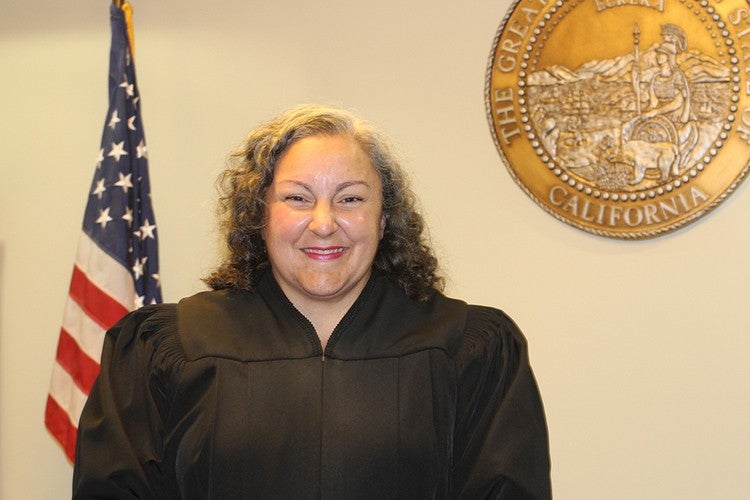
Passed by the California legislature in 2022, the Community Assistance, Recovery, and Empowerment (CARE) Act creates civil court proceedings, also known as CARE court, that can provide support for certain adults with severe mental illnesses. In Riverside County, Judge Magdalena Cohen uses her experience as part of the first cohort of CARE court judges to create a welcoming courtroom and maintain full-service partnerships.
“We’re doing our very best to make sure as many people as possible get connected to the services they need in hopes that we can see real change,” Judge Cohen says.
How CARE Court Works
The process begins when an adult files a CARE petition with a civil court. Eligible petitioners include roommates, behavioral health professionals, certain relatives, or first responders. The petition asks the court to determine if an adult with schizophrenia or another psychotic disorder, or bipolar I with psychotic features, is eligible for a CARE agreement or plan. That person is called the respondent.
Once a petition is filed, the court must determine if the respondent meets the narrow eligibility criteria and if a CARE agreement or plan would be the best option. Sometimes a respondent may not meet the clinical criteria needed for a CARE agreement. Other times, collaborative courts — or courts that can order specific rehabilitation services, like veterans’ court, drug court, or mental health court — may provide more appropriate care.
For eligible respondents, the court supervises the treatment, housing, or other behavioral health services they may receive through the county. Voluntary CARE agreements can help respondents recover and stabilize with autonomy. If a respondent is not able to enter into a voluntary CARE agreement, the court may order a CARE plan, which includes the same general elements and does not involve forced medication or custodial settings like jail.
CARE court is unique in allowing — for the first time — certain family and community members to be able to petition a court to help their loved one. Judge Cohen finds that this pathway can help reconnect respondents to their family support, which can be beneficial for both parties.
“Families may set boundaries with a loved one for their own safety,” Judge Cohen says. “But if they believe that their loved one may get the treatment or help they need, they’re more open to reengagement. Data suggests that this allows for a respondent’s longer-term stabilization and reintegration into society.”
At the Forefront of CARE Court
Riverside County was one of seven counties in California to pilot CARE court in December 2023. As an entirely new case type, Judge Cohen had to prepare despite unknown variables.
“No one knew if on day one we were going to see 100 petitions or none,” Judge Cohen says. “We had to put a lot of infrastructure in place so that regardless of what that number ended up being we could move forward.”
Her court’s main goal was to reduce barriers for respondents. At the forefront of CARE court implementation, Riverside Superior Court had to address issues that weren’t applicable for other court proceedings. Some considerations included protecting the belongings or animals of unhoused respondents while they were at a court appearance or working with the county to increase their bandwidth for remote proceedings.
“Operating CARE court required a different perspective, not just for our court staff, but for our law enforcement and security serving the court,” Judge Cohen explains. “It’s required a new level of flexibility.”
Judge Cohen Tries to Reduce Barriers for Respondents
Now, Judge Cohen sees an average of 8 respondents a day. Proceedings are mostly informal conversations where she can see what’s going well with the respondent’s CARE agreement, or if they have unaddressed needs. The courtroom itself is small and doesn’t have a jury box.
“The space works very well for CARE court,” Judge Cohen says. “Those features reduce some of the barriers and trauma responses for people that have had bad experiences in criminal court.”
Respondents start by coming to court every 30 days, with the option to decrease appearances as they feel ready. However, Judge Cohen finds that many respondents will choose to maintain a 30-day schedule, enjoying the opportunity to talk with her and get a snack from her courtroom’s wide selection.
Finding a Way Forward
CARE court works closely with social workers from the Public Defender’s Office and Riverside Behavioral Health to create a full-service partnership. This means coordinating resources to ensure each respondent can achieve the goals in their CARE agreement. For example, county social workers can get respondents into emergency therapy or housing. If there are waitlists for services, the court’s case manager can act as a contact for respondents without a reliable phone number, keeping them on the list.
A CARE agreement creates scaffolding that Judge Cohen hopes will fall away as a respondent becomes more capable of maintaining their own services.
“We always try to figure out who a person was before their diagnosis,” Judge Cohen says. “Oftentimes when a person is diagnosed with a mental illness, everything in their life becomes about the diagnosis, so we’re really trying to connect them back to the things they love to do.”
When a CARE agreement is successfully completed, the respondent graduates from CARE court with a graduation plan. The plan includes the contact information for all the respondent’s providers, such as the full-service clinic, case manager, therapists, or medication providers. Their case manager also remains available.
Additionally, CARE court graduates can create a psychiatric advance directive (PAD). A PAD allows someone to indicate their wishes should they have an episode where they are unable to make decisions.
“In CARE court, we depend on patience, empathy, and a team approach,” Judge Cohen adds. “We rely on our partners’ strengths to maximize a respondent’s potential benefits.”
The Judicial Council's Role in CARE Act Implementation
The Judicial Council, the administrative and policymaking body of the California courts, approved rules and forms, including a mandatory petition form, as well as a standard of judicial administration, to support the program. The council also allocated state funding for all courts to implement the CARE Act, as well as funding to the State Bar for representation of respondents by qualified legal services providers and public defenders. Additionally, the council is tasked with collecting program data from superior courts, as well as providing training and technical assistance to judges and court staff.
Learn more about the CARE Act.
Images