Year in Review: California Supreme Court 2025-2026
Chief Justice Patricia Guerrero has emphasized that the California judiciary works in concert to make justice accessible to all. That collaboration was especially evident during the Supreme Court’s September 2025–August 2026 court year. With the high court having a temporarily vacant seat following the October 2025 retirement of Justice Martin Jenkins, 42 Court of Appeal justices served as pro tempore justices in cases it decided last year. Representing all six appellate districts, these justices participated in cases involving the right to bail, tort liability for drug manufacturers, and peremptory challenges to judges, among other issues of statewide importance.
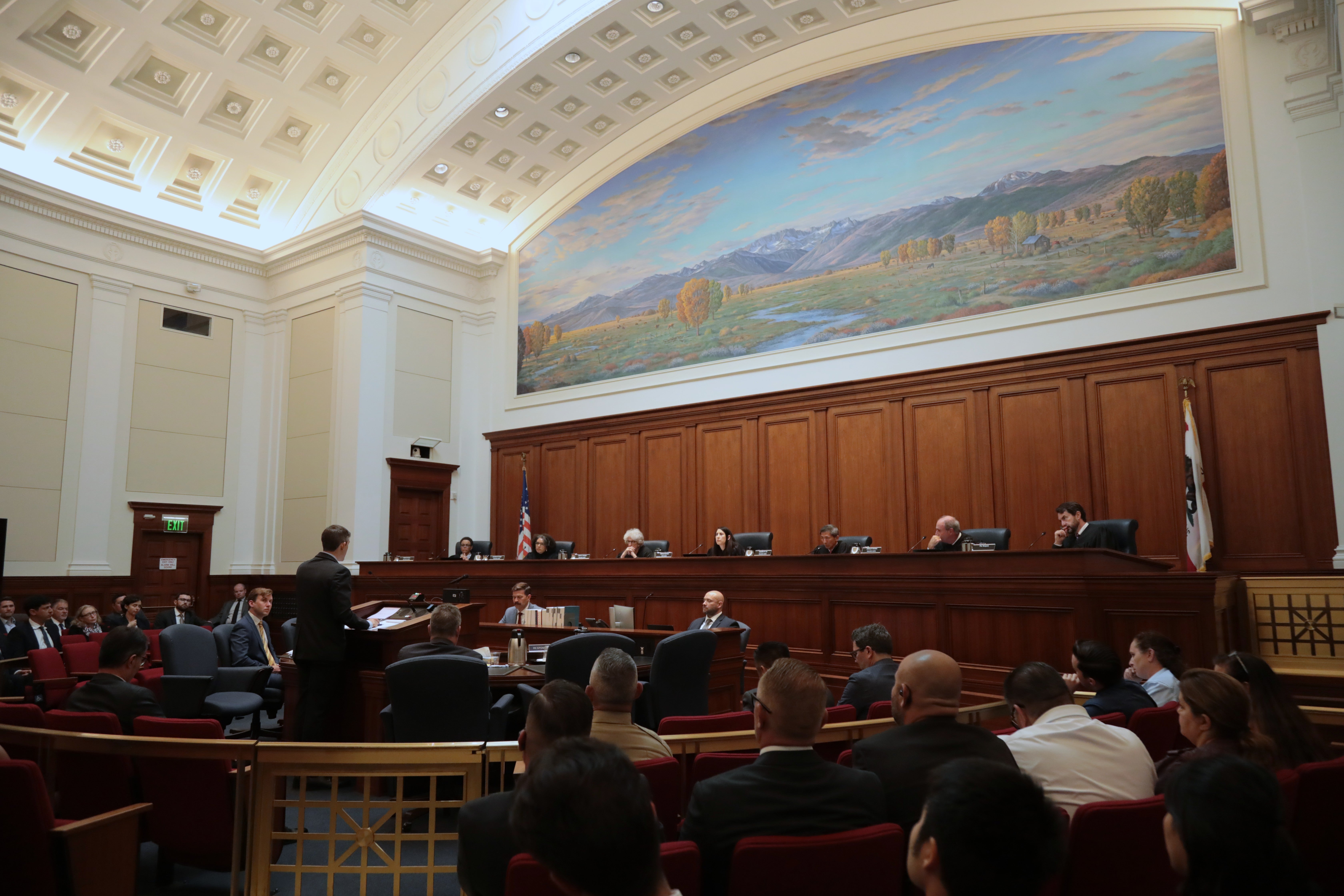
“The past year once again demonstrated how all levels of the judicial branch, and judges across the state, work together to ensure that cases are resolved fairly and efficiently,” said Chief Justice Guerrero. “The Supreme Court benefits immeasurably from the insights and perspectives of the Court of Appeal justices who serve with us. On behalf of the entire court, I thank them for their valuable contributions.”
The court filed 52 majority opinions during the 2025–2026 court year. (See chart and “Notable Decisions” below.) The court received 5,613 filings, including 3,470 petitions for review, and resolved 5,500 filings, including 3,480 petitions for review.
Retirement of Justice Jenkins
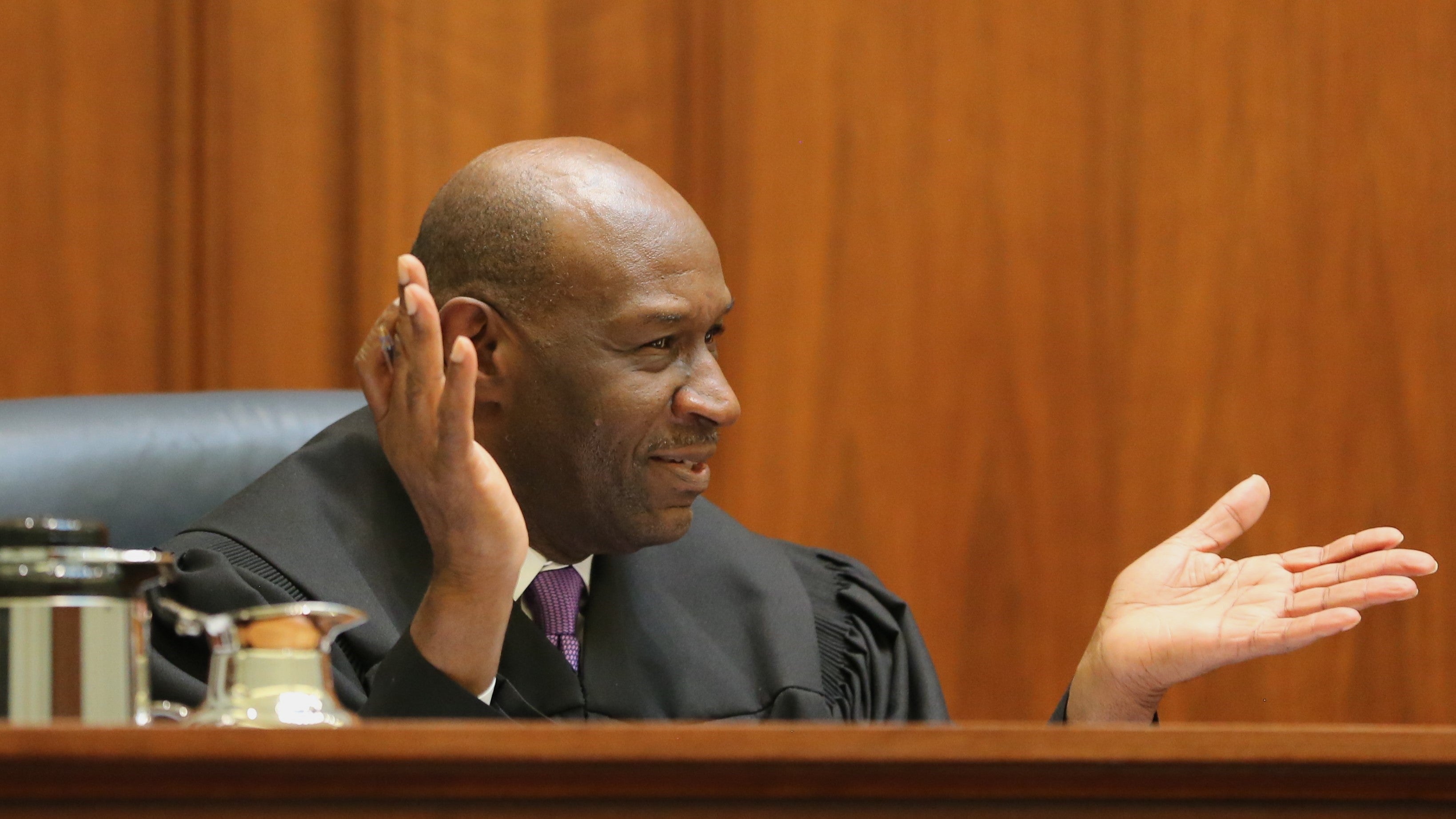
Justice Martin Jenkins retired in October 2025. Justice Jenkins’s five years with the court represented the capstone of a judicial career that began in 1989 and included more than a decade at the federal district court (1997–2008) and a similar tenure at the First District Court of Appeal (2008–2019). On his retirement, Chief Justice Guerrero described Justice Jenkins, the first openly gay justice and the third African-American man to serve on the court, as “a constant source of inspiration.”
Former Justice Joyce Kennard died in August 2026. Justice Kennard served on the court from 1989 until her retirement in 2014. The second woman and the first person of Asian descent to be appointed to the court, Justice Kennard was well-known for her independence and her intellectual rigor. At Justice Kennard’s final oral argument session, former Justice Marvin Baxter said, “Whether they agree or disagree with her on particular cases, her colleagues know she has given each and every one her thoughtful, sincere, and scholarly attention.”
The court will hold an in memoriam session later this court year to recognize Justice Kennard and her impact on the law.
At its November 2025 oral argument session, the court honored the late Justice Joseph Grodin, who served on the court between 1982 and 1987 and died in April 2025. Speakers offering tributes included former Chief Supervising Attorney Jake Dear, who had served as a staff attorney to Justice Grodin and described him as both an “excellent justice” and an “extraordinary man.”
Dear, who worked at the court for more than four decades and served as chief supervising attorney from 2007 until his retirement in 2023, passed away in June 2026. Chief Justice Guerrero paid tribute to Dear’s service, noting that “Jake was more than just a brilliant attorney. He cared deeply about the court as an institution, including all of his coworkers. Through the connections he made, generations of attorneys benefited from his sincerity, curiosity, intelligence, and good humor.”
Special Sessions
The court convened two special oral argument sessions during the 2025–2026 court year.
The first was an October 2025 outreach session at Colton Hall in Monterey, where California’s first constitution was drafted in 1849. The court’s outreach sessions provide students at locations across the state with an opportunity to interact with the justices and watch oral arguments in person.

The second special session was held in August 2026 in San Francisco. The justices heard oral argument in two cases, Cervantes v. Bianco and Bonta v. Bianco, arising out of the Riverside County sheriff’s seizure of several hundred thousand ballots cast in that county at the November 2025 statewide special election. The court issued decisions in both cases in September 2026.
Notable Decisions
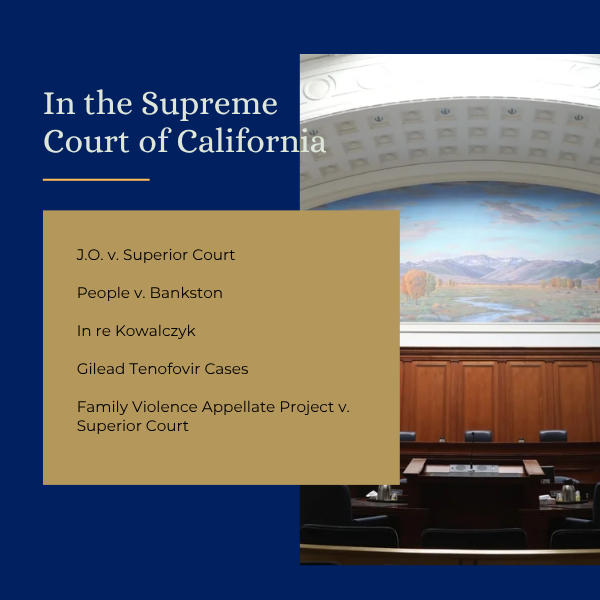
The court’s 52 decisions last court year were evenly split between civil and criminal cases. Notable decisions included:
J.O. v. Superior Court, decided in May, addressed the abuse of peremptory challenges under Code of Civil Procedure section 170.6. This statute allows a party or an attorney to disqualify a judge from a case by filing an affidavit or making a sworn statement declaring that the judge is prejudiced against them or their interests. The unanimous decision in J.O. overruled past precedent to the extent it had concluded that abusive “blanket” challenges to judges under section 170.6 did not substantially impair the functioning of the courts and that courts could not entertain as-applied challenges to alleged blanket abuses of the disqualification procedure. Drawing upon the multi-step test used to ascertain whether a peremptory challenge to a prospective juror was influenced by discrimination, the court adopted a similar inquiry for courts to distinguish between valid section 170.6 challenges and bad faith blanket challenges.
Several decisions rendered during the past year addressed issues arising under the Racial Justice Act (the RJA), a statute that provides avenues for relief when criminal proceedings are tainted by racial bias. In March, the court heard reargument in four cases — People v. Bankston, People v. Barrera, People v. Chhuon and Pan, and People v. Demolle — to allow for further consideration of the RJA issues presented in each matter. One of the issues addressed at reargument concerned whether a violation of the RJA automatically requires reversal of the judgment in a direct appeal, or whether such a violation can be found harmless. The five-justice majority opinion in Bankston concluded that a violation of the RJA based on the use of allegedly racially discriminatory language will not necessarily result in reversal, at least in cases in which the judgment was entered before the RJA’s effective date. Instead, the majority determined, this type of RJA violation may be found harmless if the People establish beyond a reasonable doubt that it did not contribute to the verdict.
In re Kowalczyk presented important questions regarding the right to bail guaranteed under the state Constitution. The court unanimously concluded that a court may deny bail only in certain limited circumstances specifically described in the state Constitution, and that when these circumstances do not exist “and a court finds it necessary to condition pretrial release on posting monetary bail, a court must set bail in a reasonable amount based on an individualized assessment of the totality of the circumstances.”
By a 6–1 margin, the court held in Gilead Tenofovir Cases that a drug manufacturer that sold a nondefective drug product could not be held liable in negligence for not taking additional steps to develop, secure regulatory approval for, and then market another, allegedly safer drug as a substitute. The majority opinion determined that the connection between the drug manufacturer’s decisions and any injury to plaintiffs implicated “a speculative chain of intervening events and discretionary decisions by third parties that are neither foreseeable in any concrete sense nor derivative of the manufacturer’s conduct.” The majority also expressed concern that imposing liability for not developing an assertedly safer substitute could skew drug manufacturers’ incentives and deter innovation.
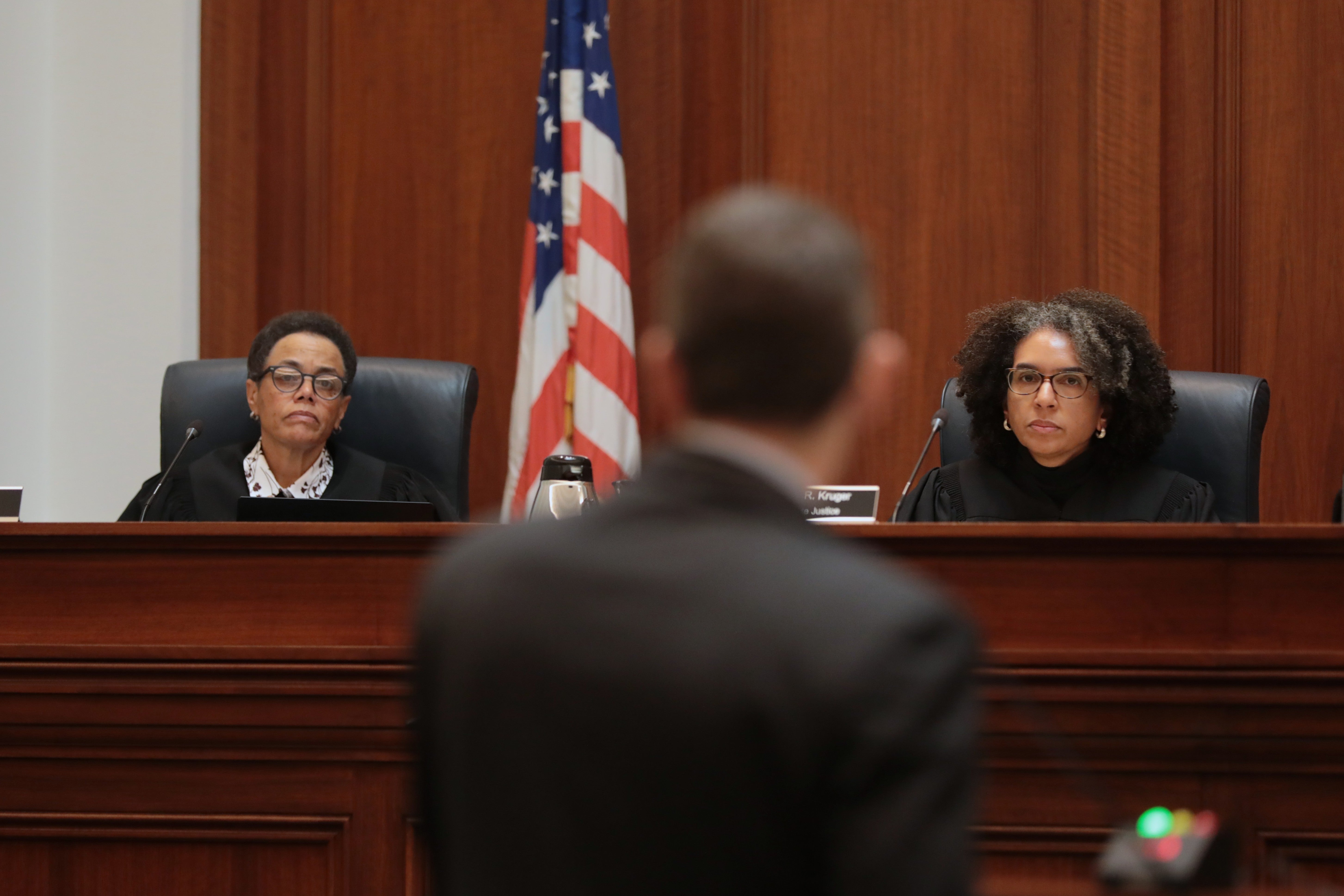
In Family Violence Appellate Project v. Superior Court, the court confronted the statewide shortage of official court reporters responsible for creating an official verbatim record of trial court proceedings, which is necessary for many appeals to be heard on their merits. In a unanimous opinion, the court held that, if an official court reporter is unavailable and a litigant is unable to afford to hire a private court reporter, trial courts are required to use electronic recording to create an official verbatim record. The court relied on the common law in forma pauperis doctrine, which functions to ensure indigent litigants have meaningful access to justice notwithstanding their financial circumstances. It concluded that this doctrine prevailed over a statute prohibiting trial courts from employing electronic recording to create an official verbatim record, and that electronic recording must be used in appropriate circumstances to provide indigent litigants with meaningful access to the appellate process.
Judicial Ethics, the State Bar, and Attorney Admissions
In June 2026, the court approved new rule 9.81 of the California Rules of Court to govern the composition, duties, and procedures of the Supreme Court’s Advisory Committee on the Code of Judicial Ethics. The advisory committee, which the court created in 1995 and had previously met on an informal and irregular basis, considers and offers recommendations to the court regarding possible amendments to the California Code of Judicial Ethics and its commentary. The new court rule sets forth the committee’s membership requirements, terms of service for members, and procedures for considering potential amendments to the code and its commentary, and further requires the committee to meet at least once each year.
The court also considered numerous requests by the State Bar to approve changes to the California Rules of Court and Rules of Professional Conduct for attorneys. One of the requests approved by the court requires attorneys to annually reaffirm their oath to “strive to conduct [themselves] at all times with dignity, courtesy, and integrity” and to uphold the United States and California Constitutions. The court also approved a rule amendment prohibiting attorneys from soliciting the subjects of domestic violence restraining orders as new clients before these orders have been formally served, curtailing a practice that had provided the subjects of these orders with advance notice of their existence. Another proposal approved by the court broadened training opportunities for aspiring lawyers who are not enrolled in a law school and are instead studying law under the supervision of a law office or a judge. Rule amendments now allow these individuals to participate in the Certified Law Students program, through which they can represent clients on a limited basis, under attorney supervision.
The court also took other actions pertaining to attorney admissions. In September, the court approved a series of amendments to the California Rules of Court that expanded the role of the State Bar’s Committee of Bar Examiners in overseeing changes to the bar exam and attorney admissions. The court later approved new guidelines developed by the committee that impose more rigorous qualifications standards for experts retained to help develop and review draft bar exam questions. And in July, the court agreed with a State Bar recommendation and determined that the National Conference of Bar Examiners’ NextGen Uniform Bar Exam will be used at future examinations, beginning with the July 2028 exam. The court further directed the examiners to develop a proposal regarding a California-specific test component that would potentially accompany the NextGen exam beginning in July 2029.
Summary of Key Court Year Statistics
[September 1, 2025 – August 31, 2026]
|
Action/Category |
Number |
|---|---|
|
Opinions |
52 |
|
Civil Cases |
26 |
|
Criminal Cases |
14 |
|
Death Penalty Cases |
12 |
|
Filings |
5,613 |
|
Petitions for Review |
3,470 |
|
Civil Appeals & Writs |
1,367 |
|
Criminal Appeals & Writs |
2,090 |
|
Death Penalty Appeals & Writs |
13 |
|
Original Proceedings |
2,143 |
|
Civil Writs & Other Matters |
319 |
|
Criminal Writs & Other Matters |
916 |
|
Executive Clemency |
27 |
|
Death Penalty Appeals & Writs |
3 |
|
Death Penalty Habeas Corpus |
6 |
|
State Bar Matters |
872 |
|
Dispositions |
5,500 |
|
Petitions for Review |
3,480 |
|
Civil Appeals & Writs |
1,353 |
|
Criminal Appeals & Writs |
2,114 |
|
Death Penalty Appeals & Writs |
13 |
|
Original Proceedings |
2,020 |
|
Civil Writs & Other Matters |
316 |
|
Criminal Writs & Other Matters |
827 |
|
Executive Clemency |
21 |
|
1 |
|
|
Death Penalty Habeas Corpus [Transferred] |
1 |
|
State Bar Matters |
854 |
|
Publication/Depublication |
|
|
Court of Appeal Opinions |
|
|
Court of Appeal Opinions |
|
|
Court of Appeal Opinions |
|
Images