
Right to be Judged by Your Peers Made Possible by Jurors
This year, the United States is celebrating the 250th anniversary of the signing of the Declaration of Independence. Outlined in the Declaration of Independence and later guaranteed as a right in the Constitution, jury service stands as one of the cornerstones of the American judicial system.
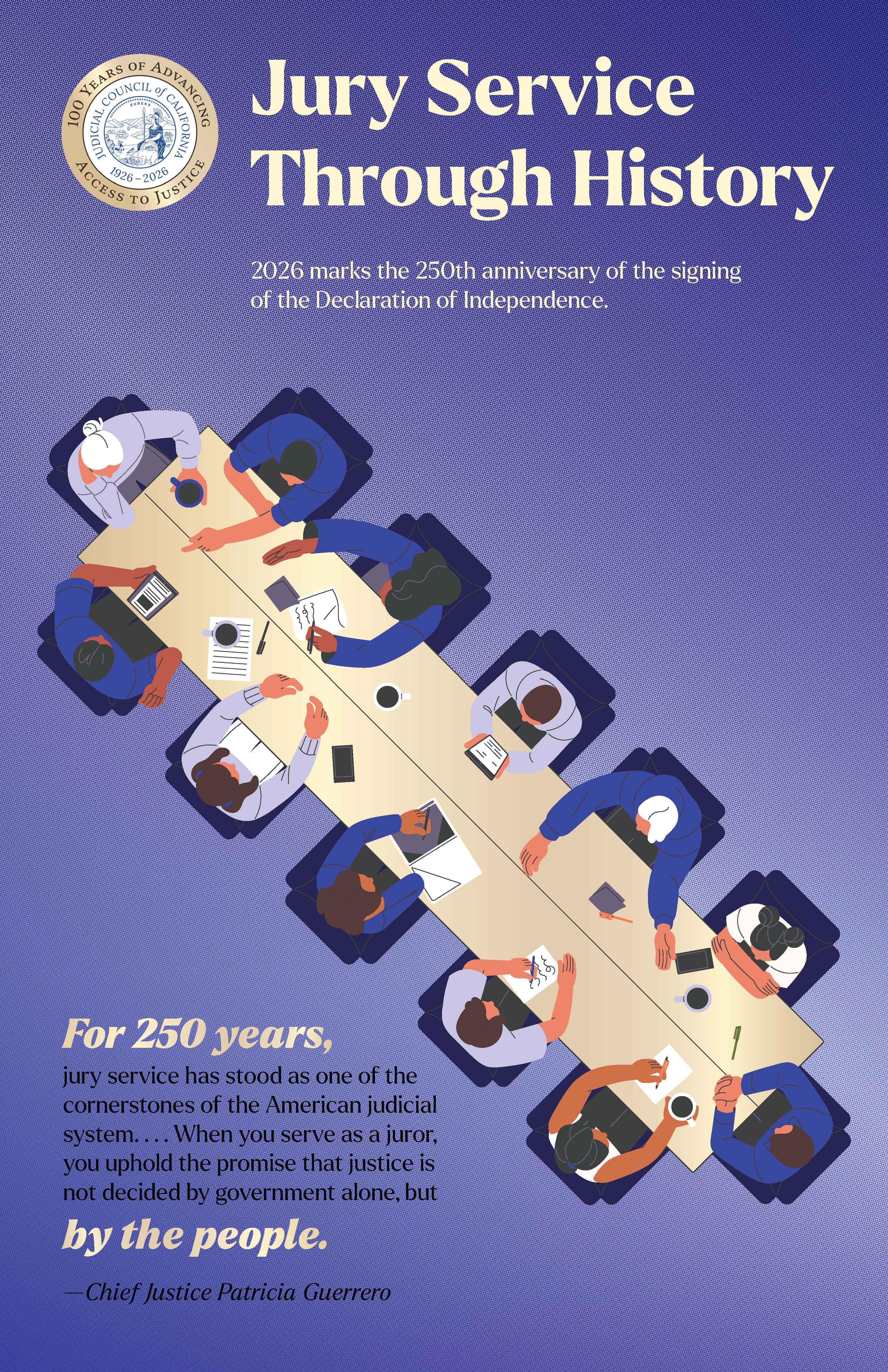
"Jury service is more than a civic duty—it is a privilege and a responsibility that ensures fairness and equality under the law," says Chief Justice of California Patricia Guerrero. "When you serve as a juror, you uphold the promise that justice is not decided by government alone, but by the people."
Juror Appreciation Week
In 1998, the California Legislature designated the second full week in May to honor the contributions of citizens who devote their time and effort to "making the cherished right of trial by jury a reality and to raise awareness about their contributions to the courts."
The Judicial Council of California and the state’s trial courts use Juror Appreciation Week to recognize the sacrifice people make in taking time away from their lives, families, and jobs to fulfill one of the most important duties in our democracy: serving as a juror in a court of law.
Every year in California:
- Over 10 million people are summoned for jury service, or 1 in 4 people statewide
- More than 4.5 million people complete jury service, either in-person, on call, or on standby
- Approximately 100,000 people are sworn in as trial jurors
- More than 70% of prospective jurors who arrive in person complete their service in one day
Making the Jury System Better for Jurors
In addition to Juror Appreciation Week, the California courts show their appreciation for jurors all year round. The following are some recent statewide initiatives to improve jury service in California:
- Gender Inclusive Language: The Judicial Council adopted a new standard of judicial administration to ensure gender inclusivity. Following the directive of Assembly Bill 1899, the new standard will use gender-neutral language in juror communications and materials, such as using the phrase "a person's jury service obligation" instead of "his or her jury service obligation."
- Juror Mental Health and Wellness: The Judicial Council released a new webpage focusing on juror mental health and wellness. After jury service, some people may feel anxiety or increased stress. The webpage highlights symptoms that may arise, offers coping techniques, and offers additional resources to receive mental health support.
- Jury Data Report: Every fiscal year, the Jury Data Report includes data from trial courts, used to improve jury operations statewide. Some of the metrics the report tracks are the number of people summoned for jury service, the most common reasons someone may be excused from jury service, and how many people complete jury service in one day.
- Juror e-Payment Platform: Courts are now able to offer an electronic payment option for jurors to receive their per diem payment. A per diem payment is the daily compensation a person receives for jury service. For electronic payments, courts do not need to collect a juror's financial information and payments can be received in as soon as one day. Jurors only need a U.S. phone number to sign up.
Additional Improvements to Jury Service Over the Years
These are a few more ways California courts have made the civic right and obligation of jury service more convenient for its citizens:
- One Day or One Trial Jury Service: If a person is not chosen for a jury panel after one day of service at a courthouse, their service is completed for at least one year. If a person is selected to serve on a jury, their service is completed for at least a year or longer after the trial is over.
- Plain Language Jury Instructions: Civil and criminal jury instructions use plain language, or language that is understandable to jurors, to accurately explain the law.
- Jury Portals: Courts continue to improve their online jury portals where individuals can check dates of service, request postponements and excusals, and sign up for reminders. Additional features include the ability to contact jury department staff with concerns, get information about court procedures, and obtain proof of jury service for employers.
Additional Resources to Learn About Jury Service
Images