
Return of Beyond the Bench Conference Encourages Collaboration to Support Children, Families, and Communities in California
About 1,000 judicial officers, court staff, attorneys, county agency representatives, tribal court leaders, and other professionals eager to learn and connect on issues related to juvenile law convened at The Westin Bonaventure Hotel in Los Angeles Nov. 17-19 for the in-person return of Beyond the Bench. Hosted by the Judicial Council’s Center for Families, Children, and the Courts (CFCC), this year’s signature multidisciplinary conference devoted to children, youth, and families in the California court system was the first in-person event of its kind since 2019.
“After six transformative years, Beyond the Bench 2025 is more than a reunion—it’s a recommitment,” said Sarah Davis, director of the council's CFCC . “This conference has always been about connection—across disciplines, systems, and lived experiences. It’s in that spirit of collaboration that we move forward, united in our mission to build a more just and supportive future for every child and family.”
This Year's Conference Focused on Collaboration, Sharing Information
The theme of this year’s conference was Coming Together Again to Support Children, Families, and Communities, based on the need to improve collaboration within the broader child welfare system affected by the COVID-19 pandemic, staff turnover, and other factors. This year’s workshops highlighted the court partnerships, voices of lived experience, and topics impacting children and families involved in juvenile dependency and delinquency cases, including cross-over legal issues such as mental health and trauma-informed practice.
A preconference day held at the beginning of the week featured workshops on the new tier rate structure for foster youth (going into effect in 2027), the Indian Child Welfare Act (ICWA), best practices for juvenile dependency attorneys, specific issues relating to juvenile court judges, and stories from incarcerated youth and restorative justice practices. The preconference event also included an all-day convening of court professionals, judicial officers, and state and local stakeholders involved in the Community, Assistance, Recovery, and Empowerment (CARE) Act.
Plenary Sessions Highlight Insights From Neuroscience, Lived Experience
The opening plenary featured welcome remarks from the Judicial Council’s Administrative Director Shelley Curran, California Department of Social Services (CDSS) Secretary Kim Johnson, and Los Angeles Superior Court Executive Officer David Slayton. In her remarks, Curran emphasized the importance of the council and courts’ collaborations with state and county partners along with the judicial branch’s partnership with the legislative and executive branches of government.
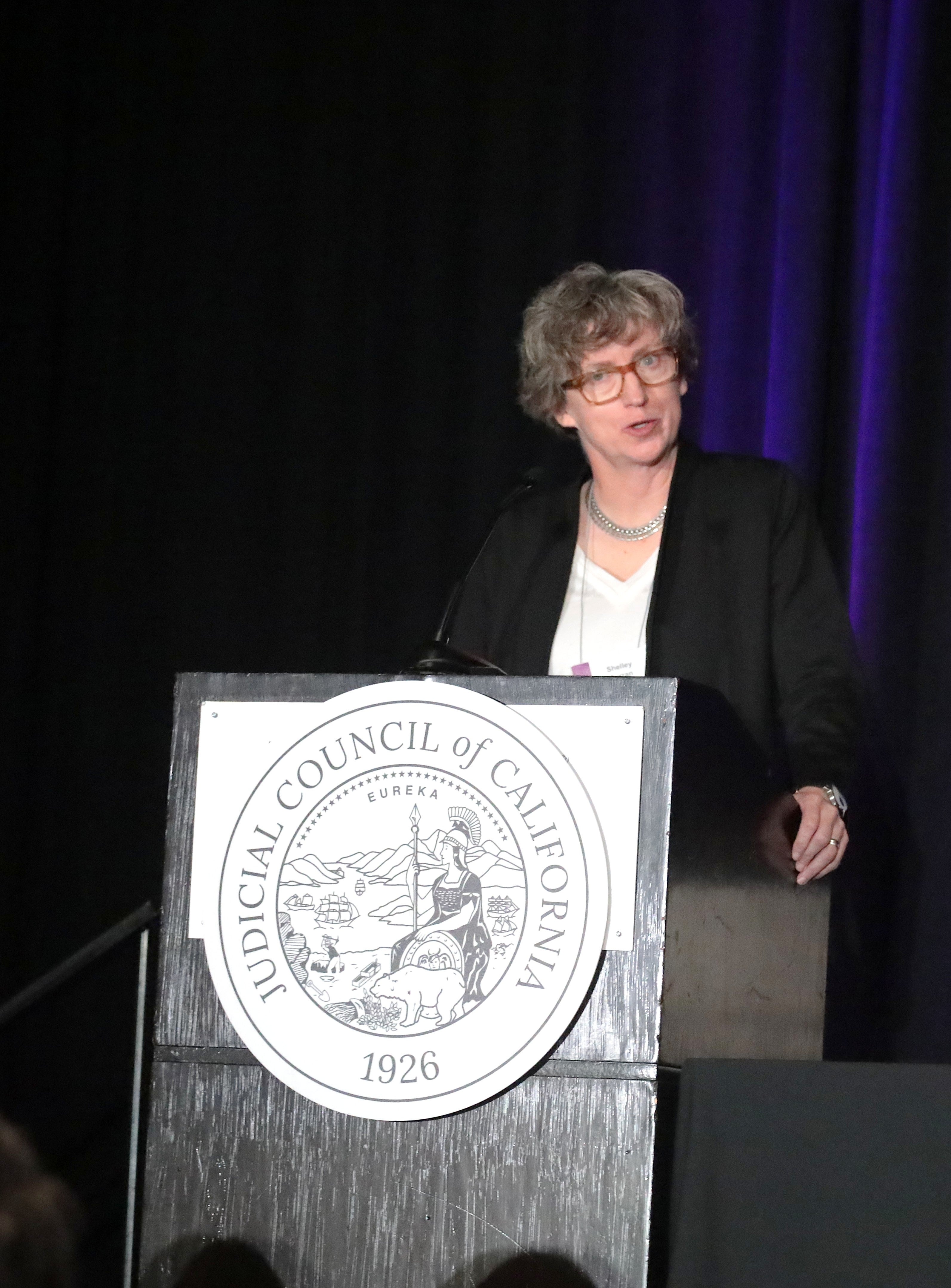
“The council has focused on giving our state agency partners voices in this conference to help us understand the needs of families and how we collaborate on improving safety, permanency, and well-being outcomes in juvenile proceedings,” said Curran.
Featured speaker Dr. Adriana Galván, dean of undergraduate education and professor of psychology at UCLA, shared neuroscience-based insights on the adolescent brain and its implications for juvenile courts.
The second day’s morning plenary featured a conversation with expert, author, and foster dad Peter Mutabazi and Orange County Presiding Judge Maria Hernandez. Presiding Judge Hernandez asked Mutabazi about being a foster dad, best practices for transitioning foster children back into their homes, and maintaining good relationships with biological parents. He emphasized it takes a village to raise a child, citing that legal professionals and social workers have a part in foster situations.
The closing plenary opened with recorded remarks by Chief Justice Patricia Guerrero. Chief Justice Guerrero thanked all participants and encouraged them to remain “committed to collaboration and to our shared goal of building justice and social systems that are rooted in dignity, and support for all children, youth, families, and individuals in our state.”
The Chief Justice’s remarks segued into the featured speaker Ali Hall’s presentation about cultivating hope. Hall, an attorney and expert in motivational interviewing, shared heartfelt videos and encouraged small group discussions and solo reflections for attendees to think and talk about how they can care for themselves as they care for others.
Prioritizing Kin-First Culture in California
Kin-first care is a system that prioritizes placing children with their extended family network in permanency and adoption matters. The council and the courts prioritize kin-first culture in partnership with the California Department of Social Services (CDSS).
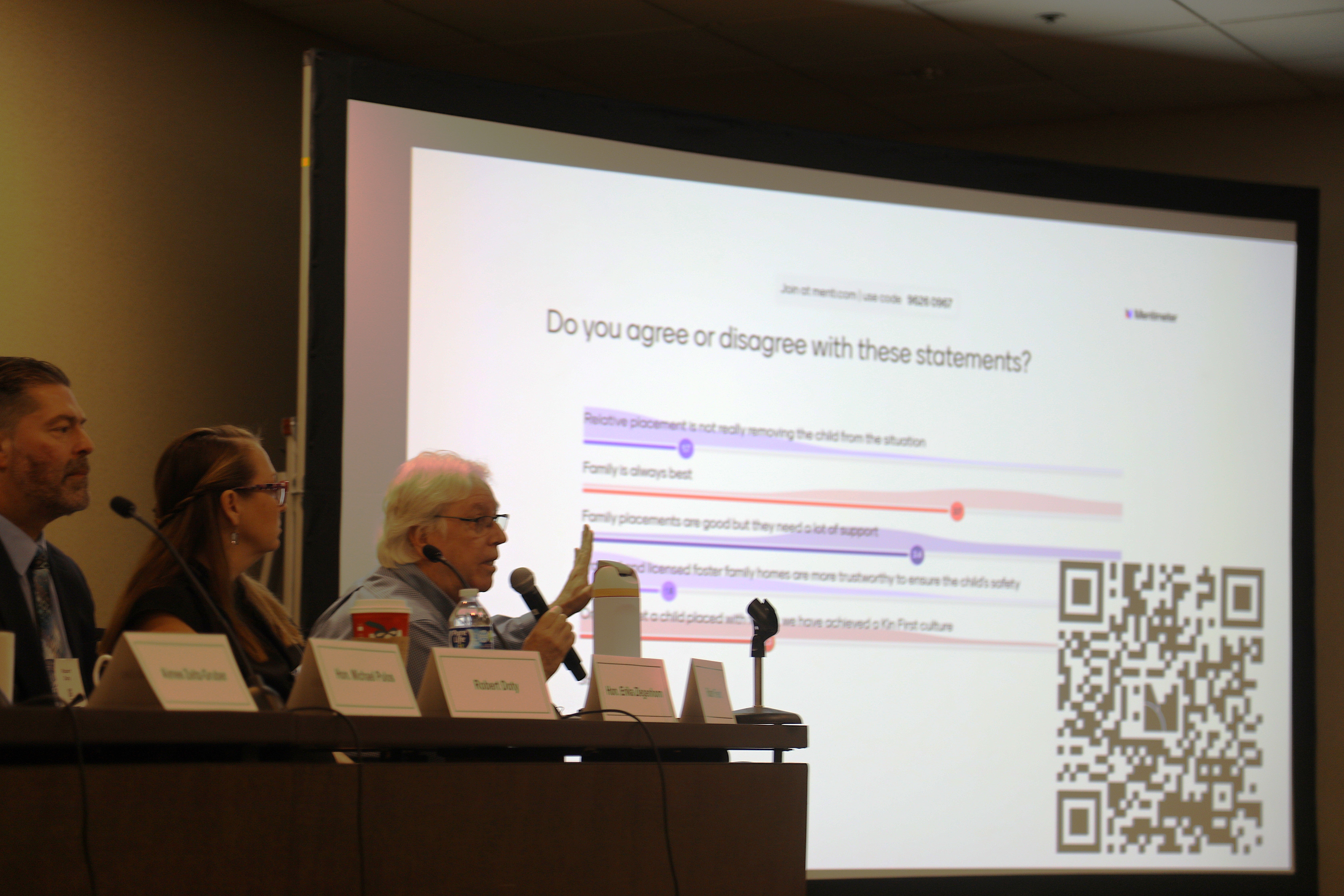
Attendees learned more about kin-first culture in a popular panel session featuring perspectives from four counties. Judge Roger Chan, presiding judge of the juvenile court in the San Francisco Superior Court, led the "Promoting a Kin-First Culture" session, which featured insights from Bob Friend, director of the National Institute for Permanent Family Connectedness (NIPFC); Erin Thuston, permanency policy bureau chief of CDSS; and judicial officers and county agency representatives from Kern, Sacramento, San Diego, and Santa Cruz. Each county shared their unique demographics, challenges, and partnerships in their respective child welfare systems.
“Thriving kin-first culture looks like a child and family team,” said Friend. “They can decide who needs to be [at the hearings], who has influence, who has the shared agreement. Do they feel like they matter and can they participate?”
Focus on CARE Act
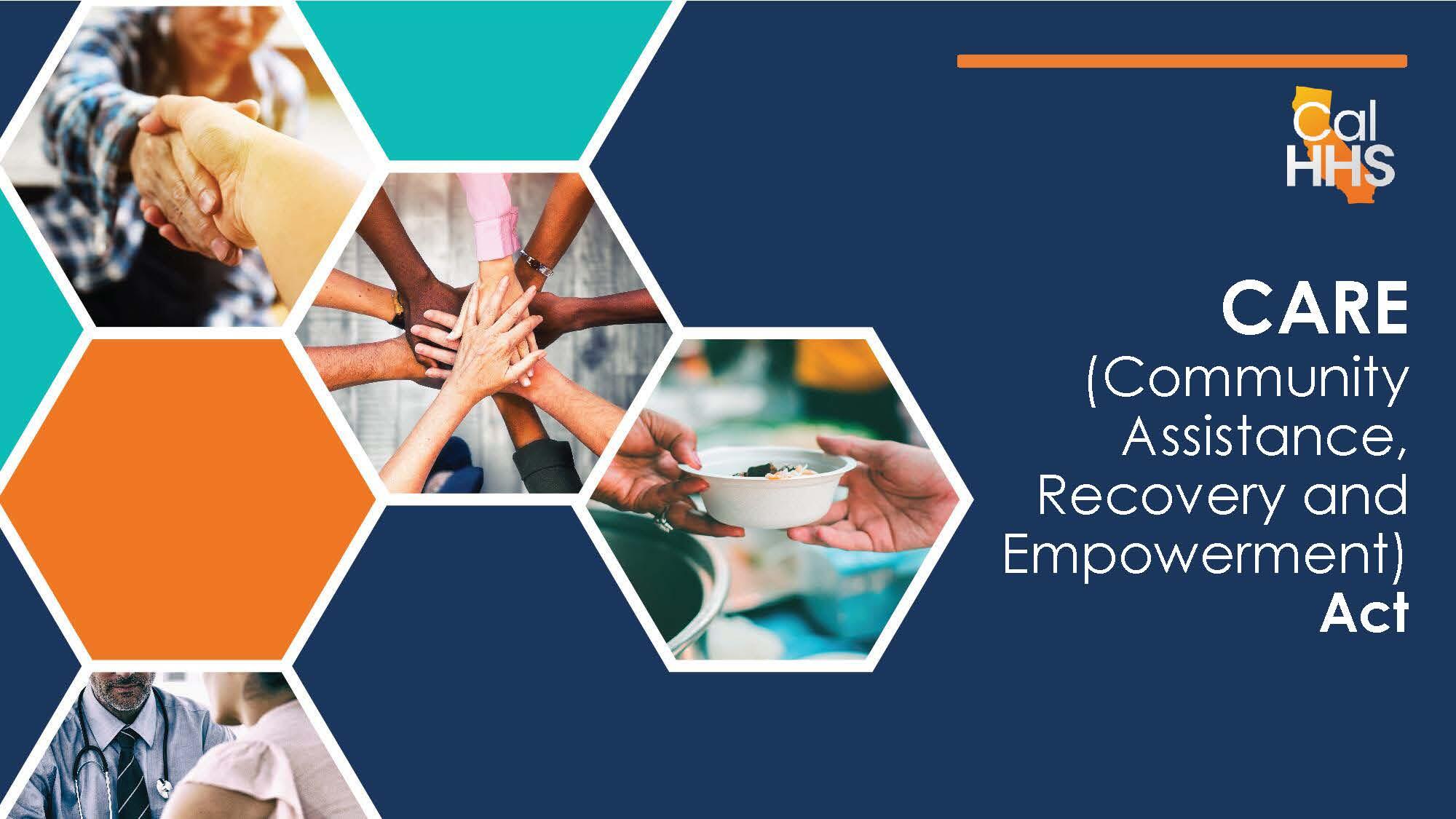
The CARE Act is a pathway to deliver mental health treatment and support services to the most vulnerable Californians. The law establishes a new, non-criminal process that authorizes certain people—such as family members or first responders—to petition a civil court for treatment and services for those with schizophrenia and other psychotic disorders, which as of Jan 1, 2026, will include bipolar I disorder with psychotic features.

The preconference CARE Act convening brought together courts and agencies to reflect on the one-year mark since full implementation. Representatives from each county—including the courts in those counties—sat together at their own tables. They discussed highlights and areas for improvement and collaboration, and shared out with the wider group. Sessions included remarks from the council’s Chief Operating Officer Salena Chow as well as state medical and psychiatric experts. The sessions also featured best practices on intra-court referrals and clarifying roles within the CARE Act process.
In a breakout session during the main conference, judicial officers from El Dorado, Calaveras, and Alameda Counties talked about the intersection of the CARE Act with juvenile law. All the panelists spoke about how the CARE Act process has been positively received in their counties. Alameda County in particular has received a strong response amongst younger participants.
The judicial officers from El Dorado and Alameda also joined judicial officers from Los Angeles and Glenn Counties at a CARE Act working group meeting hosted by California Health and Human Services (CalHHS), where they shared their processes, challenges, and success stories.
About the Judicial Council’s Center for Families, Children, and the Courts
The council's Center for Families, Children, and the Courts (CFCC) is dedicated to improving the quality of justice and services to meet the diverse needs of children, youth, and families. To that end, CFCC develops and provides education for multidisciplinary audiences, including judges, court staff, attorneys, social workers, probation officers and self-represented litigants.
View additional photos from Beyond the Bench 2025 below.

Images